Stipe S. R.
 Google
Kupinovik - Rimski arheološki lokalitet
Preveri vsa mnenja, ocene, odpiralne čase ter kontaktne podatke za Kupinovik roman villa rustica, povijesna znamenitost v mestu dol.
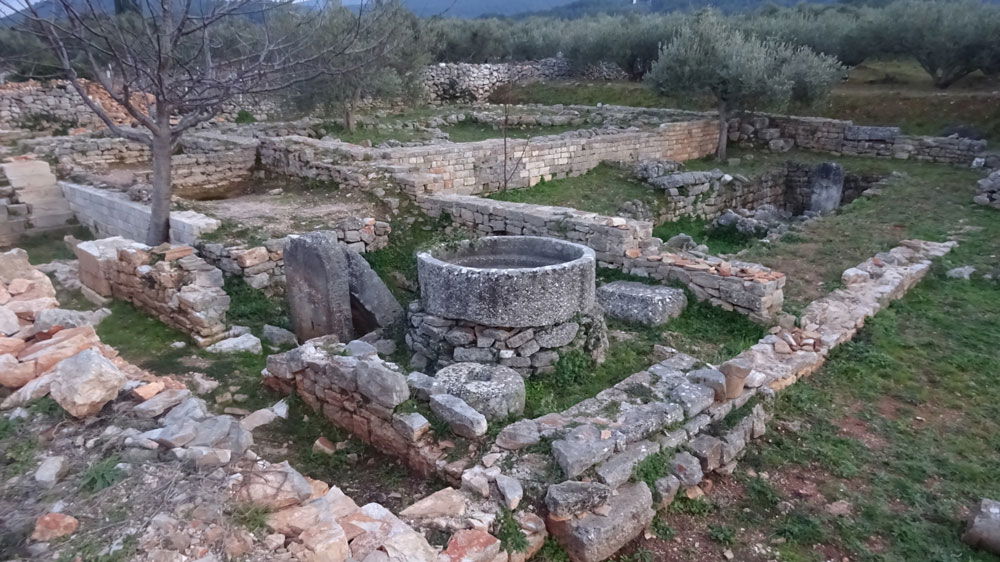
Kupinovik is a remarkable archaeological site located on the Stari Grad plain, representing an ancient Roman villa rustica that dates back to the first century AD. This villa belonged to a Roman citizen named Gaj Kornficiji Kar, a Decurion in Faria, known for cultivating olives and grapes in the surrounding agricultural lands.
Initially, Kupinovik comprised a well-designed agricultural complex, including a villa, various outbuildings, wine and olive presses, mills, and storage structures. It is considered one of the best-preserved sites of its kind on the island, showcasing much of its historical architecture despite some areas being recycled over the centuries.
Reaching Kupinovik requires some effort due to its somewhat secluded location. Visitors can find it marked on walking maps available at the tourist office in Stari Grad. The site is near the main Stari Grad to Jelsa road, close to the Dol turn-off. A small footpath leads from an unpaved road into the site, which may be overgrown. Therefore, sturdy walking shoes are advisable. It’s essential to note that the land surrounding Kupinovik is private, and visitors often walk through olive groves to access the ruins.
The remains of Kupinovik mainly consist of foundations and several intact old stone olive presses. Excavation efforts have revealed various artifacts, some of which are now housed in the archaeological museum in Split, including a beautiful black-and-white mosaic floor originally from the villa. During visits, one can observe the low walls displaying different construction phases, giving insight into the site's development over the years.
Visiting Kupinovik allows for a personal exploration of a historical site, offering a quiet atmosphere perfect for sketching or simply enjoying the surroundings. The area’s name, Kupinovik, is derived from the wild blackberries found in the vicinity, and the olive trees still grow amongst the site's walls, creating a vivid connection to its rich agricultural history.
Kupinovik stands as a testament to the agricultural lifestyle that thrived during Roman times in the Mediterranean. Its preservation, despite the challenges of time and ownership, allows visitors a rare glimpse into life as it was centuries ago on Hvar Island.
Google